Much of the information coming out of Iran is in the form of footage uploaded to the Internet without the benefit of any description or explanation. Each installment in the Close-up series provides an in-depth analysis of a single video or a series of videos covering one event.
Hundreds of protesters commemorated the death of fellow student Kianoush Asa with a peaceful march that began at noon on Tuesday, June 1, 2010, on the campus of Elm-o-Sanat (Science and Technology) University, where Asa was pursuing a graduate degree.
Kianoush Asa was killed by security forces in Tehran's Azadi Square on June 15, 2009, but his family only managed to find his body at a Tehran morgue on June 24. He was buried in section 58, plot 12 of Bagh Ferdows cemetery in his hometown of Kermanshah a few days later.
The organizers of today's ceremony may have decided to hold the commemoration two weeks earlier than the real anniversary of his death in order to circumvent severe security measures which are expected to be in place in Tehran during the anniversary of the disputed election of June 12.
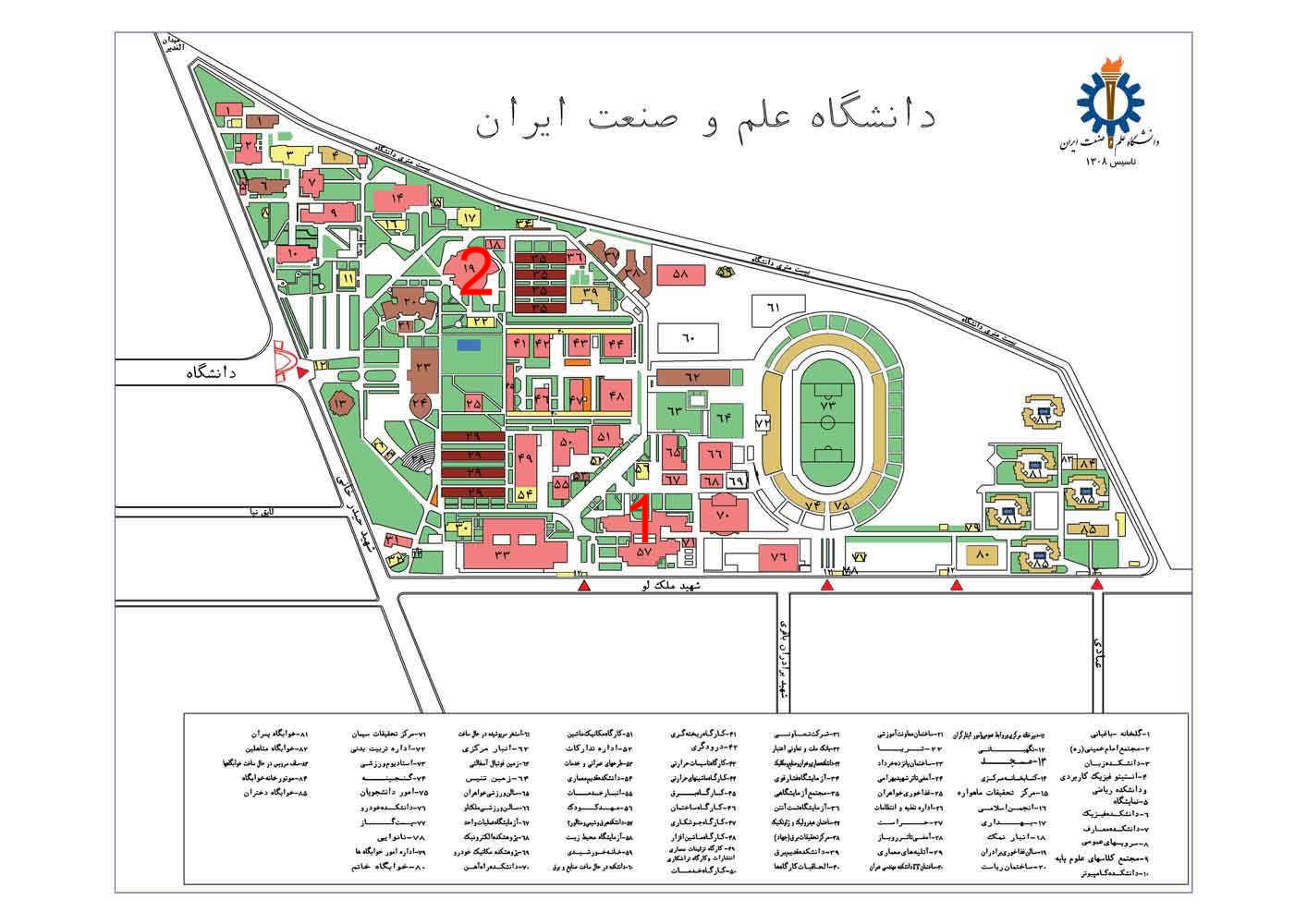
Students were asked to congregate in front of the chemical engineering school (number 1 on map below) of Elm-o-Sanat University at noon. Kianoush Asa was studying to become a petrochemical engineer before he was killed.
The following footage shows students amassed in front of the chemical engineering school as they shout, 'Students would rather die than accept humiliation':
The protesters then marched peacefully towards what has come to be called Martyr Kianoush Asa Park (number 2 on map), a green area between the men's cafeteria and the professor's cafeteria. Students have started calling the area Asa Park since a memorial service was held for Kianoush there last year.
Students chanted 'Honorable student, support, support.' They cover their faces as they go past a man who is filming them:
The same man can be seen in this footage trying to film the faces of the students:
'We are all Kianoush and Neda. We speak with one voice,' they said, referring to Asa and Neda Agha Soltan, perhaps the most famous protester killed by security forces:
'Woe on Science and Technology University if it accepts humiliation':
Students sang the protest anthem 'Yareh Dabestaniyeh Man' (My Schoolmate). For a subtitled clip of a new version of the song, please click here:
The protesters chanted the name of opposition leader Mir Hossein Mousavi. 'Ya Hossein, Mir Hossein':
On March 9, 2010, Students celebrated what would have been the birthday of Kianoush at Asa Park:
Showing posts with label protest. Show all posts
Tuesday, June 1, 2010
Wednesday, April 14, 2010
Blame your own actions for tarnishing your image, not us: Journalists' open letter to Islamic regime's judiciary
In an open letter to the Islamic Republic's judiciary chief Sadegh Larijani on March 10, 2010, more than one hundred Iranian journalists and lawyers denounced the widespread imprisonment of journalists and argued that the regime, not honest reporting, is responsible for its own tarnished image. (translation of letter at the end of this report)
The Islamic regime, is particularly sensitive about its image and often accuses its critiques of 'tarnishing' its reputation, honor, or image. 'Makhdoush kardan' -- to tarnish, disfigure, or alter -- has become a hackneyed term in the Islamic regime's lexicon and has been bandied as frequently as that other meaningless charge, 'endangering national security.'
In October of last year, when international watchdog Reporters Without Borders released its annual press freedom report in which the Islamic Republic was ranked 172nd out of 175 countries, Islamic Guidance and Culture Minister Seyed Mohammad Hosseini announced, 'The goal of ranking Iran 176th [sic] was to present an inappropriate image of the regime.' The problem was obviously the ranking system not the Islamic Republic's record.
Two months ago, the Political Division of the state radio-television broadcaster (yes, such a division officially exists) related the comments of Nourollah Heidari Dastyabi, member of the Majlis education committee, rejecting the existence of students deprived of studying in Mashhad's Ferdowsi University because of their activism. 'Counter-revolutionary sites have been spreading these rumors to tarnish the image of the sacred regime of the Islamic Republic as we approach the anniversary celebrations of the revolution (NB February 11),' Heidari Dastyabi said. Not only are students routinely expelled from universities for a set number of terms for transgressions such as participating in demonstrations, but some student leaders have been sentenced to heavy prison terms. Student leader Majid Tavakoli, for example, was sentenced to 8 and a half years behind bars in January. Other students who have been arrested and mistreated in prison: Soroush Sabet, Soroush Dastsetani, Bita Samimizad, Anahita Hosseini, Mohammad Pourabdollah, Bijan Sabagh, Behzad Bagheri, Morteza Khedmatlou, Amin Ghazai, Mohammad Zeraati, Farzad Hassanzadeh... The last two in this list were arrested at Mashhad's Ferdowsi University, by the way.
A visit to the web site of the 'Mashhad students seeking freedom and equality' takes us to a page bearing the message posted on the right. 'This blog has been shut down for one of the following reasons: The order of legal authorities to close down the blog, Infringement of the terms of use, The publication of obscene content or content which is illegal according to the laws of the country.'
Or consider this remark made by the chief of the General Inspection Organization of the Islamic Republic, Mostafa Pourmohammadi, on the state body's official web site: 'The enemy wanted to tarnish the image of the regime after the 10th presidential election (NB June 12, 2009).' Pourmohammadi, loyal servant of the regime, former Deputy Intelligence Minister, former Interior Minister, and, according to the late Grand Ayatollah Hossein Ali Montazeri, representative of the Intelligence Ministry in charge of interrogating prisoners during the mass execution of over 3,000 political prisoners in Evin Prison in the late 1980s knows a thing or two about tarnishing the face of the regime.
This short list of quotes would be even more incomplete if I did not include one by the exalted founder of the Islamic Republic, Ayatollah Ruhollah Khomeini. On May 26, 1979, a short while after the victory of the revolution, Khomeini remarked on the risk of tarnishing the image of Islam (if the words seem at times to be rambling and syntactically-challenged, please remember that they were uttered and not written down): 'The thing which I consider very important is that today we have an Islamic Republic. [...] All the various portions of the nation, especially those who are working at the top, especially the clerics who are working at the top, these people must pay attention that, God forbid, the image of the Republic of Islam does not appear ugly among the people. This is at the peak of important issues. Assets are not things which are taken away, embezzled, or confiscated. Or they can work for the deprived. Of course, these things can be done. But the most important thing is the reputation of Islam and efforts must be made to preserve this reputation.'
Speaking of the tarnished face of the regime, here are the faces of just some of the dozens of journalists who are currently in jail and have made the Islamic Republic the biggest prison for reporters in the world. The translation of the open letter to judiciary chief Sadegh Larijani follows the photos...
Ahmad Zeidabadi, arrested June 2009. Sentenced to 6 years in prison in December 2009. Journalist, secretary general of the national alumni association, member of the Association of Iranian Journalists, winner of the World Association of Newspapers' Golden Pen of Freedom Award:
Massoud Bastani, arrested July 5, 2009, sentenced to 6 years in October 2009 (per Norooz). Journalist for Jomhouriyat, arrested when he went to the Revolutionary Court to seek information about his arrested wife, journalist Mahsa Amrabadi.
Emadeddine Baghi, arrested December 8, 2009. Journalist, prominent human rights activist and the founder of the Committee for the Defense of Prisoners' Rights. Baghi was jailed in Evin prison last year. When Baghi was arrested this year, he told his children that he would 'stand strong in prison' as he was taken away. At that point, one of the intelligence agents turned to the family and said, 'He won't live long enough to stand strong.' Winner of the Martin Ennals Award, one of the most prestigious human rights prizes in the world, in 2009. He was also awarded the 2008 prize for International Journalist of the Year by the British press.
Alireza Beheshti Shirazi, arrested December 28, 2009, spent 70 days in solitary confinement. Editor of Kalameh and senior adviser of opposition leader Mir Hossein Mousavi.
Mohammad Javadi Hessar, arrested in December 2009. Journalist and former legislator in Mashhad. Senior member of opposition leader Mehdi Karroubi's Etemad Melli Party. Editor of Tous Magazine, fined and banned from journalism for 10 years in 1998 for an article criticizing higher education policies.
Mohammad Davari, arrested September 8, 2009. Editor of Saham News, opposition leader Karroubi's news site. Went on a hunger strike in march to protest his transfer to solitary confinement. In April, it was reported that he was being tortured to force him to publicly reject Karroubi's claims that the regime's security officers had raped political prisoners.
Issa Saharkhiz, arrested July 3, 2009. Editor of banned publications Akhbar Eghtesad and Aftab. Columnist for Rooz and Norooz web sites.
Hengameh Shahidi, arrested June 30, 2009, released on bail in November 2009, arrested again in February 2010. She went on a hunger strike in October 2009. She has been threatened with a 6-year sentence. Observer for Human Rights Watch, activist for Campaign Against Stoning. Adviser to opposition leader Mehdi Karroubi. Winner of Press Fair award for her coverage of the wars in Iraq and Afghanistan.
Abolfazl Abedini, arrested and badly beaten by security officers March 2, 2010. Sentenced to 11 years in prison. Transferred to Evin Prison's infirmary after severe torture on April 11, 2010. Member of the Pan-Iranist Party. Journalist who most recently covered labor unrest in Ahvaz.
Massoud Lavasani, arrested October 1, 2009. Sentence reduced from 8 and a half years to 4 and a half years upon appeal. He was forbidden to see his two-year-old son for several months. Journalist and blogger. His blog has been shut down.
Javad Mahzadeh, arrested October 2009. Sentenced to 4 years in prison on February 3, 2010. Novelist and journalist. Author of the critically-acclaimed novel 'Take Laughter Away From Me,' about a young man's life in the first decade after the revolution.
Mehdi Mahmoudian, arrested September 18, 2009. Not allowed to see his young daughter for six months. Has severe health problems, particularly a lung ailment that developed in prison. Journalist and member of the Islamic Iran Participation Front. Was the first journalist to make revelations about the notorious Kahrizak detention center.
Yasser Masoumi, arrested March 14, 2010. Technology specialist and journalist for reformist publications.
Badrolsadat Mofidi, secretary general of the Association of Iranian Journalists. The organization's offices were sealed by security forces on the night of August 5, 2009, to prevent reporters who had been convened from the around the country to participate in a general assembly. On December 22, 2009, she gave an interview to Deutsch Welle in which she described the regime's crackdown on the press. A week later, security forces stormed her house and arrested her, along with her husband Massoud Aghai.
Ali Malihi, arrested February 9, 2010. Journalist at Etemad daily and a senior member of the national alumni association (Advareh Tahkim).
Ehsan Mehrabi, arrested February 7, 2010. Journalist at Hambastegi and Etemad Melli newspapers.
Shiva Nazarahari, arrested June 14, 2009, released on bail on September 23, 2009, and arrested again on December 21, 2009, as she was driving to Ghom to attend the funeral of dissident Grand Ayatollah Hossein Ali Montazeri. Human rights activist and journalist.
Hossein Nouraninejad, arrested September 17, 2009. Journalist and head of communications for the Islamic Iran Participation Front.
Mohammad Nourizad, arrested December 20, 2009. A conservative journalist and documentary filmmaker who became a staunch critic of the regime. He issued an open letter to Leader Ali Khamenei after Khamenei's intransigent Friday Prayer sermon on June 19, strongly criticizing the regime's stance.
Open letter to judiciary chief Sadegh Larijani:
In the name of God.
To the Honorable chief of the judiciary branch, Ayatollah Sadegh Amoli Larijani:
As you know, unexpected and at times painful events took place following the 10th presidential election in the summer of last year. These events began with the peaceful and widespread objections of large portions of the Iranian people, objections which continue to this day and were confronted by the government. The government's actions, which have not ceased, include widespread arrests, trials, and imprisonments, conducted under the supervision of the judiciary or ostensibly by officers of the courts.
In this context, our concerns and anguish have been deepened by the treatment of newspapers and journalists critical of the ruling faction. Numerous newspapers and publications have been suspended, many web sites have been blocked, and dozens of reporters who have voiced criticism have been arrested. Some journalists have been tried and convicted in revolutionary courts without a jury and sometimes without the presence of a defense attorney. Many have been held in a state of uncertainty in preventive detention for months. And some have been released temporarily after paying heavy bails.
The office of the Association of Iranian Journalists was sealed months ago and a short while later, Mrs. Badrolsadat Mofidi, the secretary general of this, the only professional organization which is trusted by journalists, was arrested. She is still in jail without any steps being taken to try her in an appropriate court or to release her on suitable bail. You are aware that preventive detention is prescribed on special occasions and that the common practice is to set bail after arraignment. This process is rarely applied in the case of journalists.
Honorable chief of the judiciary branch,
When the offices of the only professional organization trusted by journalists is sealed, its secretary general is imprisoned, and dozens of journalists and bloggers are sent to jail, does this not mean that the Islamic Republic of Iran cannot tolerate journalists and their open criticisms? And is this interpretation by public opinion not the worst kind of publicity for the regime? Does it not paint the regime as violent and irrational?
When some bodies, whose only duty is to carry out the laws approved by the Majlis, begin to define crime and expand the notion of criminality, does this not constitute interference in the duties of the relevant branches (legislative and judiciary), and ultimately an infringement on the judiciary's independence? And does this not tarnish the image of the regime?
If, as is claimed, writing an article in a publication or web site, or giving an interview to a foreign media outlet tarnishes the image of the regime, then is the regime not sullied by months of confrontation with newspapers and jailed journalists and bloggers to whom fair judicial procedure has not been applied?
Honorable chief of the judiciary branch,
We are increasingly worried about the well-being of the secretary general of the Association of Iranian Journalists given the news that has surfaced almost four months after her arrest. Along with Mrs. Mofidi, many of our colleagues and friends are currently in prison and this adds to our concerns.
We are journalists. Our duty is to disseminate news and analyze the political, economic, social, and cultural situation in the country. Our duty is to draw a true picture of whatever is occurring. And, of course, criticism is our most obvious right.
Free our friends and colleagues so that they may carry out their duties.
April 10, 2010
Signed:
Journalists
Shiva Aba, Farzaneh Ebrahimzadeh, fatemeh Astiri, Saeedeh Eslamiyeh, Amir Houshang Eftekharirad, Zohreh Aghayani, Sanaz Allahbedashti, Parvin Emami, Amir hadi Anvari, Lida Ayaz, Masoumeh Imani, Sergeh Barseghian, Parvin Bakhtiarnejad, Setareh Bakhtiari, Mohammad Bastehnegar, Sadra Baktash, Jila Baniyaghoub, Negin Behkam, Fatemeh Beikpour, Iman Paknahad, Mahmoud Pourrezai, Abdolreza Tajik, Mehdi Tajik, Reza Tehrani, Zahra Jafarzadeh, Hamid Jafari, Mohammad Jafari, Noushin Jafari, Hamidreza Jalaipour, Reza Javalchi, Nargess Jodaki, Fereshteh Haghi, Ali Hekmat, Mohammad Heidari, Hadi Heidari, Alireza Khamsian, Reza Khojasteh Rahimi, Elaheh Khosravi, Ali Dehghan, Nima Rad, Alireza Rajai, Taghi Rahmani, Shabnam Rahmati, Alireza Rahiminejad, Sami Rastegari, Marzieh Rasouli, Nargess Rasouli, Nasrin Rezai, Massoud Rafii Taleghani, Ali Ranjipour, Farzaneh Roustai, Mohammad Reza Zahdi, Masoumeh Sotoudeh, Ezatollah Sohabi, Sonita Sorabpour, Pouria Souri, Ali Asghar Seidabadi, Mariam Shabani, Reza Shojaian, Saba Sherdoust, Hamed Shafii, Mashaollah Shamsolvaezin, Ameneh Shirafkan, Hedi saber, Mohammad Sadeghi, Azam Taleghani, Siamak Taheri, Rihaneh Tabatabai, Ehsan Abedi, Eshrat Abdollahi, Mohammad Adli, Amin Alamolhedi, Hadis Elmi, Mohammad Hassan Alipour, Reza Alijani, Reza Gheibi, Ezra Farahani, Mehran Farji, Soroush Farhadian, Soleiman Farhadian, Gisou Foghfori, Mahtab Gholizadeh, Morteza Kazemian, Azam Golbari, Sara Laghai, Marjan Laghai, Seyed Hamid Motaghi, Hassan Mohammadi, Davoud Mohammadi, Soleiman Mohammadi, Nargess Mohammadi, Sam Mahmoudisarai, Saeed Madani, Ali Mazroui, Mohammad Javad Mozafar, Abouzar Motamedi, Sara Masoumi, Behrad Mehrjou, Keyvan Mehregan, Ameneh Mousavi, Minou Momeni, Bijan Momeivand, Maryam Nazari, Sahar Namazikhah, Mehdi Norouzian, Azam Veisameh, Zeinab Hemati, Massoud Youssefi
Lawyers supporting journalists
Nemat Ahmadi
(FaceBook page, lawyer of Fiaz Zahed of the Etemad Melli Party, Feizollah Arabsorkhi of the Mojahedin of the Islamic Revolution Organization, etc. Six-part interview with Nemat Ahmadi on VOA.)
Saghi Bakhtiari
Houshang Pourbabai
(Lawyer of Mostafa Tajzadeh and Mohsen Mirdamadi of the Islamic Iran Participation Front, etc. Interview with Houshang Pourbabai)
Seyed Mohammad Ali Dadkhah
(One of the founders of the Defenders of Human Rights Center. Lawyer of Zahra Kazemi, Iranian-Canadian photographer killed in custody, Omidreza Mirsayafi, blogger who died under suspicious circusmtances in Evin Prison last year, Ebrahim Yazdi of the Freedom Party, etc.)
Nasrin Sotoudeh
(Member of the Defenders of Human Rights Center and the campaign for One Million Signatures. Defender of women's rights activists and juvenile offenders facing execution. Lawyer of Arash rahmanipour, 20, who was executed for moharebeh, Mohammd Sedigh Kabudvand, human rights activist in Kurdistan province, etc. CNN interview with Nasrin Sotoudeh.)
Abdolfatah Soltani
(Founding member of the Defenders of Human Rights Center. Prominent defender of numerous activists, he has been imprisoned many times, most recently for 72 days after being arrested in June 2009. Awarded the Nuremberg Human Rights prize. )
Seyed Mohammad Seifzadeh
(Founding member of the Defenders of Human Rights Center. Has defended members of the Baha'i faith, student activists, journalist Mashaollah Shamsolvaezin, etc.)
Sahar Seifi
Shirin Ebadi
(Founding member of the Defenders of Human Rights Center. Nobel Peace Prize laureate.)
Farideh Gheirat
(Director of the Association for the Defense of Prisoners.)
Mariam Karbassi
Mariam Kianarsi
(Member of the Volunteer Lawyers Network which opposed the Islamic penal Code bill).
Marzieh Nikara
Saleh Nikbakht
(Member of the Association for the Defense of Prisoners. Lawyer of opposition political leaders Abdollah Ramezanzadeh and Mohammad Ali Abtahi, etc. Interview with Saleh Nikbakht about the second session of the infamous show trials.)
The Islamic regime, is particularly sensitive about its image and often accuses its critiques of 'tarnishing' its reputation, honor, or image. 'Makhdoush kardan' -- to tarnish, disfigure, or alter -- has become a hackneyed term in the Islamic regime's lexicon and has been bandied as frequently as that other meaningless charge, 'endangering national security.'
In October of last year, when international watchdog Reporters Without Borders released its annual press freedom report in which the Islamic Republic was ranked 172nd out of 175 countries, Islamic Guidance and Culture Minister Seyed Mohammad Hosseini announced, 'The goal of ranking Iran 176th [sic] was to present an inappropriate image of the regime.' The problem was obviously the ranking system not the Islamic Republic's record.
Two months ago, the Political Division of the state radio-television broadcaster (yes, such a division officially exists) related the comments of Nourollah Heidari Dastyabi, member of the Majlis education committee, rejecting the existence of students deprived of studying in Mashhad's Ferdowsi University because of their activism. 'Counter-revolutionary sites have been spreading these rumors to tarnish the image of the sacred regime of the Islamic Republic as we approach the anniversary celebrations of the revolution (NB February 11),' Heidari Dastyabi said. Not only are students routinely expelled from universities for a set number of terms for transgressions such as participating in demonstrations, but some student leaders have been sentenced to heavy prison terms. Student leader Majid Tavakoli, for example, was sentenced to 8 and a half years behind bars in January. Other students who have been arrested and mistreated in prison: Soroush Sabet, Soroush Dastsetani, Bita Samimizad, Anahita Hosseini, Mohammad Pourabdollah, Bijan Sabagh, Behzad Bagheri, Morteza Khedmatlou, Amin Ghazai, Mohammad Zeraati, Farzad Hassanzadeh... The last two in this list were arrested at Mashhad's Ferdowsi University, by the way.
A visit to the web site of the 'Mashhad students seeking freedom and equality' takes us to a page bearing the message posted on the right. 'This blog has been shut down for one of the following reasons: The order of legal authorities to close down the blog, Infringement of the terms of use, The publication of obscene content or content which is illegal according to the laws of the country.'
Or consider this remark made by the chief of the General Inspection Organization of the Islamic Republic, Mostafa Pourmohammadi, on the state body's official web site: 'The enemy wanted to tarnish the image of the regime after the 10th presidential election (NB June 12, 2009).' Pourmohammadi, loyal servant of the regime, former Deputy Intelligence Minister, former Interior Minister, and, according to the late Grand Ayatollah Hossein Ali Montazeri, representative of the Intelligence Ministry in charge of interrogating prisoners during the mass execution of over 3,000 political prisoners in Evin Prison in the late 1980s knows a thing or two about tarnishing the face of the regime.
This short list of quotes would be even more incomplete if I did not include one by the exalted founder of the Islamic Republic, Ayatollah Ruhollah Khomeini. On May 26, 1979, a short while after the victory of the revolution, Khomeini remarked on the risk of tarnishing the image of Islam (if the words seem at times to be rambling and syntactically-challenged, please remember that they were uttered and not written down): 'The thing which I consider very important is that today we have an Islamic Republic. [...] All the various portions of the nation, especially those who are working at the top, especially the clerics who are working at the top, these people must pay attention that, God forbid, the image of the Republic of Islam does not appear ugly among the people. This is at the peak of important issues. Assets are not things which are taken away, embezzled, or confiscated. Or they can work for the deprived. Of course, these things can be done. But the most important thing is the reputation of Islam and efforts must be made to preserve this reputation.'
Speaking of the tarnished face of the regime, here are the faces of just some of the dozens of journalists who are currently in jail and have made the Islamic Republic the biggest prison for reporters in the world. The translation of the open letter to judiciary chief Sadegh Larijani follows the photos...
Ahmad Zeidabadi, arrested June 2009. Sentenced to 6 years in prison in December 2009. Journalist, secretary general of the national alumni association, member of the Association of Iranian Journalists, winner of the World Association of Newspapers' Golden Pen of Freedom Award:
Massoud Bastani, arrested July 5, 2009, sentenced to 6 years in October 2009 (per Norooz). Journalist for Jomhouriyat, arrested when he went to the Revolutionary Court to seek information about his arrested wife, journalist Mahsa Amrabadi.
Emadeddine Baghi, arrested December 8, 2009. Journalist, prominent human rights activist and the founder of the Committee for the Defense of Prisoners' Rights. Baghi was jailed in Evin prison last year. When Baghi was arrested this year, he told his children that he would 'stand strong in prison' as he was taken away. At that point, one of the intelligence agents turned to the family and said, 'He won't live long enough to stand strong.' Winner of the Martin Ennals Award, one of the most prestigious human rights prizes in the world, in 2009. He was also awarded the 2008 prize for International Journalist of the Year by the British press.
Alireza Beheshti Shirazi, arrested December 28, 2009, spent 70 days in solitary confinement. Editor of Kalameh and senior adviser of opposition leader Mir Hossein Mousavi.
Mohammad Javadi Hessar, arrested in December 2009. Journalist and former legislator in Mashhad. Senior member of opposition leader Mehdi Karroubi's Etemad Melli Party. Editor of Tous Magazine, fined and banned from journalism for 10 years in 1998 for an article criticizing higher education policies.
Mohammad Davari, arrested September 8, 2009. Editor of Saham News, opposition leader Karroubi's news site. Went on a hunger strike in march to protest his transfer to solitary confinement. In April, it was reported that he was being tortured to force him to publicly reject Karroubi's claims that the regime's security officers had raped political prisoners.
Issa Saharkhiz, arrested July 3, 2009. Editor of banned publications Akhbar Eghtesad and Aftab. Columnist for Rooz and Norooz web sites.
Hengameh Shahidi, arrested June 30, 2009, released on bail in November 2009, arrested again in February 2010. She went on a hunger strike in October 2009. She has been threatened with a 6-year sentence. Observer for Human Rights Watch, activist for Campaign Against Stoning. Adviser to opposition leader Mehdi Karroubi. Winner of Press Fair award for her coverage of the wars in Iraq and Afghanistan.
Abolfazl Abedini, arrested and badly beaten by security officers March 2, 2010. Sentenced to 11 years in prison. Transferred to Evin Prison's infirmary after severe torture on April 11, 2010. Member of the Pan-Iranist Party. Journalist who most recently covered labor unrest in Ahvaz.
Massoud Lavasani, arrested October 1, 2009. Sentence reduced from 8 and a half years to 4 and a half years upon appeal. He was forbidden to see his two-year-old son for several months. Journalist and blogger. His blog has been shut down.
Javad Mahzadeh, arrested October 2009. Sentenced to 4 years in prison on February 3, 2010. Novelist and journalist. Author of the critically-acclaimed novel 'Take Laughter Away From Me,' about a young man's life in the first decade after the revolution.
Mehdi Mahmoudian, arrested September 18, 2009. Not allowed to see his young daughter for six months. Has severe health problems, particularly a lung ailment that developed in prison. Journalist and member of the Islamic Iran Participation Front. Was the first journalist to make revelations about the notorious Kahrizak detention center.
Yasser Masoumi, arrested March 14, 2010. Technology specialist and journalist for reformist publications.
Badrolsadat Mofidi, secretary general of the Association of Iranian Journalists. The organization's offices were sealed by security forces on the night of August 5, 2009, to prevent reporters who had been convened from the around the country to participate in a general assembly. On December 22, 2009, she gave an interview to Deutsch Welle in which she described the regime's crackdown on the press. A week later, security forces stormed her house and arrested her, along with her husband Massoud Aghai.
Ali Malihi, arrested February 9, 2010. Journalist at Etemad daily and a senior member of the national alumni association (Advareh Tahkim).
Ehsan Mehrabi, arrested February 7, 2010. Journalist at Hambastegi and Etemad Melli newspapers.
Shiva Nazarahari, arrested June 14, 2009, released on bail on September 23, 2009, and arrested again on December 21, 2009, as she was driving to Ghom to attend the funeral of dissident Grand Ayatollah Hossein Ali Montazeri. Human rights activist and journalist.
Hossein Nouraninejad, arrested September 17, 2009. Journalist and head of communications for the Islamic Iran Participation Front.
Mohammad Nourizad, arrested December 20, 2009. A conservative journalist and documentary filmmaker who became a staunch critic of the regime. He issued an open letter to Leader Ali Khamenei after Khamenei's intransigent Friday Prayer sermon on June 19, strongly criticizing the regime's stance.
Open letter to judiciary chief Sadegh Larijani:
In the name of God.
To the Honorable chief of the judiciary branch, Ayatollah Sadegh Amoli Larijani:
As you know, unexpected and at times painful events took place following the 10th presidential election in the summer of last year. These events began with the peaceful and widespread objections of large portions of the Iranian people, objections which continue to this day and were confronted by the government. The government's actions, which have not ceased, include widespread arrests, trials, and imprisonments, conducted under the supervision of the judiciary or ostensibly by officers of the courts.
In this context, our concerns and anguish have been deepened by the treatment of newspapers and journalists critical of the ruling faction. Numerous newspapers and publications have been suspended, many web sites have been blocked, and dozens of reporters who have voiced criticism have been arrested. Some journalists have been tried and convicted in revolutionary courts without a jury and sometimes without the presence of a defense attorney. Many have been held in a state of uncertainty in preventive detention for months. And some have been released temporarily after paying heavy bails.
The office of the Association of Iranian Journalists was sealed months ago and a short while later, Mrs. Badrolsadat Mofidi, the secretary general of this, the only professional organization which is trusted by journalists, was arrested. She is still in jail without any steps being taken to try her in an appropriate court or to release her on suitable bail. You are aware that preventive detention is prescribed on special occasions and that the common practice is to set bail after arraignment. This process is rarely applied in the case of journalists.
Honorable chief of the judiciary branch,
When the offices of the only professional organization trusted by journalists is sealed, its secretary general is imprisoned, and dozens of journalists and bloggers are sent to jail, does this not mean that the Islamic Republic of Iran cannot tolerate journalists and their open criticisms? And is this interpretation by public opinion not the worst kind of publicity for the regime? Does it not paint the regime as violent and irrational?
When some bodies, whose only duty is to carry out the laws approved by the Majlis, begin to define crime and expand the notion of criminality, does this not constitute interference in the duties of the relevant branches (legislative and judiciary), and ultimately an infringement on the judiciary's independence? And does this not tarnish the image of the regime?
If, as is claimed, writing an article in a publication or web site, or giving an interview to a foreign media outlet tarnishes the image of the regime, then is the regime not sullied by months of confrontation with newspapers and jailed journalists and bloggers to whom fair judicial procedure has not been applied?
Honorable chief of the judiciary branch,
We are increasingly worried about the well-being of the secretary general of the Association of Iranian Journalists given the news that has surfaced almost four months after her arrest. Along with Mrs. Mofidi, many of our colleagues and friends are currently in prison and this adds to our concerns.
We are journalists. Our duty is to disseminate news and analyze the political, economic, social, and cultural situation in the country. Our duty is to draw a true picture of whatever is occurring. And, of course, criticism is our most obvious right.
Free our friends and colleagues so that they may carry out their duties.
April 10, 2010
Signed:
Journalists
Shiva Aba, Farzaneh Ebrahimzadeh, fatemeh Astiri, Saeedeh Eslamiyeh, Amir Houshang Eftekharirad, Zohreh Aghayani, Sanaz Allahbedashti, Parvin Emami, Amir hadi Anvari, Lida Ayaz, Masoumeh Imani, Sergeh Barseghian, Parvin Bakhtiarnejad, Setareh Bakhtiari, Mohammad Bastehnegar, Sadra Baktash, Jila Baniyaghoub, Negin Behkam, Fatemeh Beikpour, Iman Paknahad, Mahmoud Pourrezai, Abdolreza Tajik, Mehdi Tajik, Reza Tehrani, Zahra Jafarzadeh, Hamid Jafari, Mohammad Jafari, Noushin Jafari, Hamidreza Jalaipour, Reza Javalchi, Nargess Jodaki, Fereshteh Haghi, Ali Hekmat, Mohammad Heidari, Hadi Heidari, Alireza Khamsian, Reza Khojasteh Rahimi, Elaheh Khosravi, Ali Dehghan, Nima Rad, Alireza Rajai, Taghi Rahmani, Shabnam Rahmati, Alireza Rahiminejad, Sami Rastegari, Marzieh Rasouli, Nargess Rasouli, Nasrin Rezai, Massoud Rafii Taleghani, Ali Ranjipour, Farzaneh Roustai, Mohammad Reza Zahdi, Masoumeh Sotoudeh, Ezatollah Sohabi, Sonita Sorabpour, Pouria Souri, Ali Asghar Seidabadi, Mariam Shabani, Reza Shojaian, Saba Sherdoust, Hamed Shafii, Mashaollah Shamsolvaezin, Ameneh Shirafkan, Hedi saber, Mohammad Sadeghi, Azam Taleghani, Siamak Taheri, Rihaneh Tabatabai, Ehsan Abedi, Eshrat Abdollahi, Mohammad Adli, Amin Alamolhedi, Hadis Elmi, Mohammad Hassan Alipour, Reza Alijani, Reza Gheibi, Ezra Farahani, Mehran Farji, Soroush Farhadian, Soleiman Farhadian, Gisou Foghfori, Mahtab Gholizadeh, Morteza Kazemian, Azam Golbari, Sara Laghai, Marjan Laghai, Seyed Hamid Motaghi, Hassan Mohammadi, Davoud Mohammadi, Soleiman Mohammadi, Nargess Mohammadi, Sam Mahmoudisarai, Saeed Madani, Ali Mazroui, Mohammad Javad Mozafar, Abouzar Motamedi, Sara Masoumi, Behrad Mehrjou, Keyvan Mehregan, Ameneh Mousavi, Minou Momeni, Bijan Momeivand, Maryam Nazari, Sahar Namazikhah, Mehdi Norouzian, Azam Veisameh, Zeinab Hemati, Massoud Youssefi
Lawyers supporting journalists
Nemat Ahmadi
(FaceBook page, lawyer of Fiaz Zahed of the Etemad Melli Party, Feizollah Arabsorkhi of the Mojahedin of the Islamic Revolution Organization, etc. Six-part interview with Nemat Ahmadi on VOA.)
Saghi Bakhtiari
Houshang Pourbabai
(Lawyer of Mostafa Tajzadeh and Mohsen Mirdamadi of the Islamic Iran Participation Front, etc. Interview with Houshang Pourbabai)
Seyed Mohammad Ali Dadkhah
(One of the founders of the Defenders of Human Rights Center. Lawyer of Zahra Kazemi, Iranian-Canadian photographer killed in custody, Omidreza Mirsayafi, blogger who died under suspicious circusmtances in Evin Prison last year, Ebrahim Yazdi of the Freedom Party, etc.)
Nasrin Sotoudeh
(Member of the Defenders of Human Rights Center and the campaign for One Million Signatures. Defender of women's rights activists and juvenile offenders facing execution. Lawyer of Arash rahmanipour, 20, who was executed for moharebeh, Mohammd Sedigh Kabudvand, human rights activist in Kurdistan province, etc. CNN interview with Nasrin Sotoudeh.)
Abdolfatah Soltani
(Founding member of the Defenders of Human Rights Center. Prominent defender of numerous activists, he has been imprisoned many times, most recently for 72 days after being arrested in June 2009. Awarded the Nuremberg Human Rights prize. )
Seyed Mohammad Seifzadeh
(Founding member of the Defenders of Human Rights Center. Has defended members of the Baha'i faith, student activists, journalist Mashaollah Shamsolvaezin, etc.)
Sahar Seifi
Shirin Ebadi
(Founding member of the Defenders of Human Rights Center. Nobel Peace Prize laureate.)
Farideh Gheirat
(Director of the Association for the Defense of Prisoners.)
Mariam Karbassi
Mariam Kianarsi
(Member of the Volunteer Lawyers Network which opposed the Islamic penal Code bill).
Marzieh Nikara
Saleh Nikbakht
(Member of the Association for the Defense of Prisoners. Lawyer of opposition political leaders Abdollah Ramezanzadeh and Mohammad Ali Abtahi, etc. Interview with Saleh Nikbakht about the second session of the infamous show trials.)
Monday, April 5, 2010
Security forces and protesters clash in Orumiyeh
The following footage shows protesters clashing with security forces next to Orumiyeh Lake, northwest Iran, on April 2, 2010, Sizdah Bedar in the Iranian calendar. Sizdah Bedar is the 13th day of the Iranian new year when everyone traditionally leaves the house to go on picnics and celebrate nature.
The level of Orumiyeh Lake has fallen drastically in recent years because of the construction of dams on rivers flowing into this body of water. Environmentalists fear that Orumiyeh Lake will turn into salt lands within decades. Activists in West Azerbaijan province had called on citizens to come to the banks of the lake on Sizdah Bedar, an appropriate celebration of nature, to voice their concerns.
Protesters from around Azerbaijan brought bottles of water with them and ceremoniously emptied them into the beleaguered lake.
Security forces had set up blockades on roads leading to the lake and prevented protesters from making their way to the meeting point.
The level of Orumiyeh Lake has fallen drastically in recent years because of the construction of dams on rivers flowing into this body of water. Environmentalists fear that Orumiyeh Lake will turn into salt lands within decades. Activists in West Azerbaijan province had called on citizens to come to the banks of the lake on Sizdah Bedar, an appropriate celebration of nature, to voice their concerns.
Protesters from around Azerbaijan brought bottles of water with them and ceremoniously emptied them into the beleaguered lake.
Security forces had set up blockades on roads leading to the lake and prevented protesters from making their way to the meeting point.
Sunday, April 4, 2010
The anthem that refuses to go away
The spectators, who were gathered at London's Barbican center for a concert by celebrated vocalist Mohammad Reza Shajarian, gave a spontaneous rendition of the patriotic, anti-Islamic Republic, anthem Ey Iran on Saturday evening, April 3, 2010.
The wildly popular Master Shajarian, a living legend of Iranian classical music, was performing with the Shahnaz Ensemble, under the direction of Majid Derakhshani. The following footage shows the audience singing several lines from Ey Iran...
Following the disputed election of June 12, Shajarian demanded that the state radio-television of the Islamic Republic refrain from playing his music in protest at the regime's violent crackdown against demonstrators. 'I have always been on the side of the "dust and dirt"', Shajarian said at the time, using a derogatory phrase that Mahmoud Ahmadinejad had employed on June 14 to describe protesters. The arch-conservative Keyhan newspaper, run by Leader Ali Khamenei's representative Hossein Shariatmadari, subsequently wrote that Shajarian had 'sold out his country.'
One of Shajarian's latest works, Tofangat Ra Zamin Begozar (Lay down your gun), is a thinly veiled indictment of the regime's actions:
Ey Iran has never been the national anthem of the country, although it played that de facto role for a few months between the victory of the 1979 revolution and the establishment of the Islamic Republic. Neither the first official anthem of the Islamic Republic, Payandeh Bada Iran (May Iran Be Everlasting), with its religiously militant tones -- Our helper is the hand of God/He is our guide in this battle./Under the shadow of the eternal Qoran/May Iran be everlasting! -- nor the current anthem adopted in 1990 after the death of Ayatollah Ruhollah Khomeini, with its elegiac references to the Imam (Khomeini) and the martyrs of the revolution, have ever enjoyed the popularity of Ey Iran.
The song became an instant success from the moment it was written by Hossein Golegolab and Ruhollah Khaleghi in the aftermath of World war II. Its rousing melody, rooted in the notes of traditional Iranian music, its unabashed patriotic lyrics without any mention of religion except for the word izadi (divine), which is a pre-Islamic term from the Pahlavi language and Zoroastrianism, have turned Ey Iran into an anthem of opposition to the Islamic Republic. In the following footage, literally thousands of demonstrators chant the song in the streets of Tehran on June 18:
And in this video, violinist Shadmehr Aghilli, decked in appropriate green, plays the tune while spectators sing two verses from the song at a concert in July 2009 in the United States:
For those readers who have never heard the full song, here is a version by the fabulous soprano Darya Dadvar at a concert in Vancouver, April 2007. Notice how the audience spontaneously stands up once she starts singing:
As for Iranian national anthems, past, present, and future, I have developed a soft spot for Vatanam (My Homeland), particularly the following version by classical vocalist Salar Aghili. This 19th-Century song is the first ever national anthem of Iran and it was written by a Frenchman. But that is a story for another post...
---
Ey Iran
Oh Iran, oh bejeweled land
Oh, your soil is the wellspring of the arts
Far from you may the thoughts of evil be
May you remain lasting and eternal
Oh enemy, if you are of stone, I am of iron
May my life be sacrificed for the pure soil of my homeland
Since your love became my calling
My thoughts are never far from you
In your cause, when do our lives have value?
May the land of our Iran be eternal
The stones of your mountains are jewels and pearls
The soil of your valleys are better than gold
When could I rid my heart of your affection?
Tell me, what will I do without your affection?
As long as the turning of the earth and the cycle of the heavens lasts
The light of the divine will always guide us
Since your love became my calling
My thoughts are never far from you
In your cause, when do our lives have value?
May the land of our Iran be eternal
Iran oh my green paradise
Bright is my fate because of you
If fire rains on my body
Other than your affection I will not cherish in my heart
Your water, soil and love molded my clay
If your love leaves my heart it will become barren
Since your love became my calling
My thoughts are never far from you
In your cause, when do our lives have value?
May the land of our Iran be eternal
(translation, with a few personal modifications, courtesy of Wikipedia)
The wildly popular Master Shajarian, a living legend of Iranian classical music, was performing with the Shahnaz Ensemble, under the direction of Majid Derakhshani. The following footage shows the audience singing several lines from Ey Iran...
May my life be sacrificed for the pure soil of my homeland
Since your love became my calling
My thoughts are never far from you
In your cause, when do our lives have value?
May the land of our Iran be eternal.
Following the disputed election of June 12, Shajarian demanded that the state radio-television of the Islamic Republic refrain from playing his music in protest at the regime's violent crackdown against demonstrators. 'I have always been on the side of the "dust and dirt"', Shajarian said at the time, using a derogatory phrase that Mahmoud Ahmadinejad had employed on June 14 to describe protesters. The arch-conservative Keyhan newspaper, run by Leader Ali Khamenei's representative Hossein Shariatmadari, subsequently wrote that Shajarian had 'sold out his country.'
One of Shajarian's latest works, Tofangat Ra Zamin Begozar (Lay down your gun), is a thinly veiled indictment of the regime's actions:
Ey Iran has never been the national anthem of the country, although it played that de facto role for a few months between the victory of the 1979 revolution and the establishment of the Islamic Republic. Neither the first official anthem of the Islamic Republic, Payandeh Bada Iran (May Iran Be Everlasting), with its religiously militant tones -- Our helper is the hand of God/He is our guide in this battle./Under the shadow of the eternal Qoran/May Iran be everlasting! -- nor the current anthem adopted in 1990 after the death of Ayatollah Ruhollah Khomeini, with its elegiac references to the Imam (Khomeini) and the martyrs of the revolution, have ever enjoyed the popularity of Ey Iran.
The song became an instant success from the moment it was written by Hossein Golegolab and Ruhollah Khaleghi in the aftermath of World war II. Its rousing melody, rooted in the notes of traditional Iranian music, its unabashed patriotic lyrics without any mention of religion except for the word izadi (divine), which is a pre-Islamic term from the Pahlavi language and Zoroastrianism, have turned Ey Iran into an anthem of opposition to the Islamic Republic. In the following footage, literally thousands of demonstrators chant the song in the streets of Tehran on June 18:
And in this video, violinist Shadmehr Aghilli, decked in appropriate green, plays the tune while spectators sing two verses from the song at a concert in July 2009 in the United States:
For those readers who have never heard the full song, here is a version by the fabulous soprano Darya Dadvar at a concert in Vancouver, April 2007. Notice how the audience spontaneously stands up once she starts singing:
As for Iranian national anthems, past, present, and future, I have developed a soft spot for Vatanam (My Homeland), particularly the following version by classical vocalist Salar Aghili. This 19th-Century song is the first ever national anthem of Iran and it was written by a Frenchman. But that is a story for another post...
---
Ey Iran
Oh Iran, oh bejeweled land
Oh, your soil is the wellspring of the arts
Far from you may the thoughts of evil be
May you remain lasting and eternal
Oh enemy, if you are of stone, I am of iron
May my life be sacrificed for the pure soil of my homeland
Since your love became my calling
My thoughts are never far from you
In your cause, when do our lives have value?
May the land of our Iran be eternal
The stones of your mountains are jewels and pearls
The soil of your valleys are better than gold
When could I rid my heart of your affection?
Tell me, what will I do without your affection?
As long as the turning of the earth and the cycle of the heavens lasts
The light of the divine will always guide us
Since your love became my calling
My thoughts are never far from you
In your cause, when do our lives have value?
May the land of our Iran be eternal
Iran oh my green paradise
Bright is my fate because of you
If fire rains on my body
Other than your affection I will not cherish in my heart
Your water, soil and love molded my clay
If your love leaves my heart it will become barren
Since your love became my calling
My thoughts are never far from you
In your cause, when do our lives have value?
May the land of our Iran be eternal
(translation, with a few personal modifications, courtesy of Wikipedia)
Tuesday, March 23, 2010
Ramin Ramezani: A lesser-known martyr
CNN's Reza Sayah spoke to Zahra and Mehdi Ramezani, the parents of Ramin Ramezani, who was killed by Basij militiamen on June 15, 2009. This report was broadcast on March 22, 2010.
Thursday, March 18, 2010
'Don't be afraid, we're all together': Images of chahar shanbeh souri
For more videos and coverage of chahar shanbeh souri in other parts of the country, please click here.
The following video is purportedly from Khorram Abad, capital of the western province of Lorestan. The people chant 'Death to the dictator!' and 'Don't be afraid, we're all together,' one of the first slogans used in the post-election unrest. The protesters shout a challenge to security forces.
Tuesday, December 29, 2009
Ashura - 27 December 2009 - part 10 - Provisional list of dead protesters: death toll now at 8
(Updated Tuesday,29 December 2009)
The opposition has released a provisional list of protesters killed in today's demonstrations in Tehran. This is only a preliminary list and only concerns the day of Ashura, December 27, in the capital. A woman was allegedly shot and killed in Sirjan during protests yesterday, but she is not among these victims. According to Jonbesheh Raheh Sabz, they are:
- Mehdi Farhadinia, 34, Mehdi Farhadirad according to the Islamic Republic Police News Service
- Mohammad Ali Rasekhinia, 40
- Amir Arshadi, 30
- Shahram Faraji, 30
- Seyed Ali Habibi Mousavi (nephew of opposition leader Mir Hossein Mousavi), 42
- Jahanbakht Pazooki, 50
- According to the Islamic Republic Police News Service, an unidentified woman, 43, and man, 31 were also killed. It is unclear how the police could be so precise on their ages and not have their names.
Please provide additional confirmed information you may have in the comments section or by email to me.
(More reports from Ashura, December 27, 2009, click here)
Sunday, December 27, 2009
Ashura - 27 December 2009 - part 9 - Regime employs extreme violence
Demonstrators had expected that the regime would refrain from using excessive force because of the peaceful nature of the holy month of Moharram. But footage and photos coming out of Iran indicate that the opposite occurred and that security forces resorted to violence that had been unseen since the deadly protests of this summer.
The regime has denied anyone was killed in the protests today. The following pictures tell another story. I will add more as they come in:
A man shot in the head, according to various reports (courtesy AP):
This footage shows a young man shot in the back. Some reports claim this protester is Mir Hossein Mousavi's nephew:
Taken at Vali Asr Square. The young man at the end of the video is close to death. Protesters say that he was run over by a security vehicle:
(More reports from Ashura, December 27, 2009, click here)
The regime has denied anyone was killed in the protests today. The following pictures tell another story. I will add more as they come in:
A man shot in the head, according to various reports (courtesy AP):
This footage shows a young man shot in the back. Some reports claim this protester is Mir Hossein Mousavi's nephew:
Taken at Vali Asr Square. The young man at the end of the video is close to death. Protesters say that he was run over by a security vehicle:
(More reports from Ashura, December 27, 2009, click here)
Ashura - 27 December 2009 - part 8 - The people fight back
Reports, photos, and footage from Iran signal a renewed vigor among protesters who have not shied from directly confronting security forces.
Protesters smash a police van and pull out the policemen as others shout 'Don't hit them!'
'I'll kill the one who has killed my brother...' Protesters set security motorcycles on fire and attack regime agents, while others tell them to let the men go:
Barricade in Tehran:
The building of the Basij of the national oil company, corner of Somayeh and Hafez streets in Tehran, is set on fire:
Protesters attack police in anti-riot gear:
'Death to Khamenei' as blazes rage around the protesters:
Demonstrators heckle security forces on motorcycles:
People charge a group of security troops attempting to arrest protesters:
'Death to Khamenei' as smoke rises over a rock-strewn street:
(More reports from Ashura, December 27, 2009, click here)
Protesters smash a police van and pull out the policemen as others shout 'Don't hit them!'
'I'll kill the one who has killed my brother...' Protesters set security motorcycles on fire and attack regime agents, while others tell them to let the men go:
Barricade in Tehran:
The building of the Basij of the national oil company, corner of Somayeh and Hafez streets in Tehran, is set on fire:
Protesters attack police in anti-riot gear:
'Death to Khamenei' as blazes rage around the protesters:
Demonstrators heckle security forces on motorcycles:
People charge a group of security troops attempting to arrest protesters:
'Death to Khamenei' as smoke rises over a rock-strewn street:
(More reports from Ashura, December 27, 2009, click here)
Ashura - 27 December 2009 - part 7 - Eyewitness to BBC Persian
View Ashura - Tehran - Corner of Roudaki and Azadi streets in a larger map
Male caller to BBC Persian:
It was about 1:30 in the afternoon. We were at the corner of Roudaki and Azadi streets. There was a huge crowd and the special guard was attacking us from all sides. They showed no mercy. Old, young, man, woman... they beat everyone without holding back. A few of us were left behind and the security forces converged on them and started hitting them with such savagery. My friend was among those protesters and we couldn't do anything to help. He was beaten to a pulp and we couldn't take him anywhere. We were afraid to take him to a hospital. We called private clinics and they refused to treat our friend. We had to bring him to our home. At normal hospitals, they arrest anyone who may have been injured during protests. (voice is breaking) We don't know what to do. We think that our friend may have become blind. Security forces are all over the place. The sound of motorcycles has new meaning for us. They entered people's homes and arrested protesters who were taking shelter there. The people have become radicalized, both their slogans and the way they stand up to the security forces now. I don't think the people will surrender.
(More reports from Ashura, December 27, 2009, click here)
Ashura - 27 December 2009 - part 6 - Police station set on fire
The following footage shows security forces had completely abandoned Vali Asr Square. The police station is set on fire by protesters. At the end of the video, a seriously injured protester, close to death, is laid down on the ground. The remarks of the surrounding protesters indicate that the man was run over by a car driven by security forces:
(More reports from Ashura, December 27, 2009, click here)
Ashura - 27 December 2009 - part 5 - Mousavi's nephew allegedly killed
Opposition leader Mir Hossein Mousavi's nephew was killed during today's protests, according to Parleman News, the news site of the Imam Line faction of the Majlis.
Parleman News reports that Seyed Ali Mousavi, 35, the nephew of Mir Hossein Mousavi, was shot in the heart at Tehran's Enghelab (Revolution) Square at noon.
Mousavi's nephew was transferred to Sina Hospital in the Sadeghiyeh district, where he was declared dead.
According to Parleman News, Mir Hossein Mousavi and his relatives are currently at the hospital. Seyed Ali Mousavi was the son of Mir Hossein Mousavi's sister.
This news has been confirmed by an opposition figure who spoke to Radio Farda and wished to remain anonymous. Several other sources, including Iran expert Alireza Nourizadeh and opposition spokesman and award-winning filmmaker Mohsen Makhmalbaf, have also confirmed this information. Makhmalbaf has provided the following photograph of Seyed Ali Mousavi with his uncle:
(More reports from Ashura, December 27, 2009, click here)
Parleman News reports that Seyed Ali Mousavi, 35, the nephew of Mir Hossein Mousavi, was shot in the heart at Tehran's Enghelab (Revolution) Square at noon.
Mousavi's nephew was transferred to Sina Hospital in the Sadeghiyeh district, where he was declared dead.
According to Parleman News, Mir Hossein Mousavi and his relatives are currently at the hospital. Seyed Ali Mousavi was the son of Mir Hossein Mousavi's sister.
This news has been confirmed by an opposition figure who spoke to Radio Farda and wished to remain anonymous. Several other sources, including Iran expert Alireza Nourizadeh and opposition spokesman and award-winning filmmaker Mohsen Makhmalbaf, have also confirmed this information. Makhmalbaf has provided the following photograph of Seyed Ali Mousavi with his uncle:
(More reports from Ashura, December 27, 2009, click here)
Ashura - 27 December 2009 - part 4 - Live rounds used by security forces
The use of live rounds appears to have been particularly heavy-handed for the first time since the deadly protests of this summer. Radio Farda reports at least four dead in Tehran.
The following photo released AFP shows a severely injured protester lying on the street:
The following footage shows demonstrators carrying an injured protester at University Crossroads, Tehran:
Protester severely injured:
(More reports from Ashura, December 27, 2009, click here)
The following photo released AFP shows a severely injured protester lying on the street:
The following footage shows demonstrators carrying an injured protester at University Crossroads, Tehran:
Protester severely injured:
(More reports from Ashura, December 27, 2009, click here)
Ashura - 27 December 2009 - part 3 - Heightened violence
The preliminary death toll, according to various sources, is between four and seven in Tehran.
Regime forces take cover near several burning motorcycles (courtesy AFP):
Protesters clash with security forces:
An injured member of the security forces is helped as fires blaze behind the group (courtesy AP):
A police car on fire:
Southwest of 7th Tir Square, Hafez Street, a burning garbage container is pushed through the crowd:
(More reports from Ashura, December 27, 2009, click here)
Regime forces take cover near several burning motorcycles (courtesy AFP):
Protesters clash with security forces:
An injured member of the security forces is helped as fires blaze behind the group (courtesy AP):
A police car on fire:
Southwest of 7th Tir Square, Hafez Street, a burning garbage container is pushed through the crowd:
(More reports from Ashura, December 27, 2009, click here)
Ashura - 27 December 2009 - part 2 - Keshavarz Boulevard
The cameraman gives the date and location of his footage: 'Keshavarz Boulevard (NB North of Tehran University), 10th of Moharram (NB December 27).
Protesters chant 'Death to this leadership!' before heckling a helicopter flying overhead. Then 'Yazid will be overthrown. This is the month of blood.' Ashura is the commemoration of Imam Hossein's martyrdom at the hands of Yazid, the second caliph of the Umayid dynasty.
(More reports from Ashura, December 27, 2009, click here)
Protesters chant 'Death to this leadership!' before heckling a helicopter flying overhead. Then 'Yazid will be overthrown. This is the month of blood.' Ashura is the commemoration of Imam Hossein's martyrdom at the hands of Yazid, the second caliph of the Umayid dynasty.
(More reports from Ashura, December 27, 2009, click here)
Ashura - 27 December 2009 - Khamenei dead end
The symbolism of this footage is wonderful. Protesters trample a street sign which reads 'Khamanei Dead End':
(More reports from Ashura, December 27, 2009, click here)
Friday, December 11, 2009
A statement allegedly from members of Iran's military strongly denounces Revolutionary Guards role in crackdown
A statement issued late Thursday night and purporting to be from members of the Islamic Republic of Iran's military strongly warns elements within the Revolutionary Guards against continuing their crackdown on the Iranian people.
Initially posted on the Gouya News site, a usually dependable source, the statement quickly spread across the Internet. It was read last night by protesters in Paris:
In Iran, the term armed forces or 'nirouhayeh mossalah' includes the three usual branches of the military -- army, navy, and air force -- and also the Revolutionary Guards (IRGC). To complicate matters, the IRGC also has ground forces, a navy, and an air force (plus the Ghods force and the Basij). I employ the term 'the military' -- artesh in the statement -- to refer to the regular army, air force, and navy.
The veracity of source of the statement cannot be confirmed. However, some elements in the text are noteworthy. Why did the author(s) not include navy personnel in the list of signatories? Why were training staff and professors included in the list of signatories? Why are distinct organizations, locations, and staffs included in the details?
Has the regime identified these places as hotbeds of dissent and is it issuing this statement in order to justify future purges? It does not seem credible, for example, that dissenting professors at the Imam Ali University for officers, which has a relatively limited number of professors, would so clearly identify themselves.
Or is the statement really issued by military personnel?
The following is a translation of the text:
In the name of pure God (NB Instead of the Arabic Allah, the word Yazdan is used. Yazdan is derived from the ancient Iranian language of Pahlavi. This may indicate that the author(s) of the statement are more patriotic than religious. It may also indicate that the author(s) want to target military personnel who are more patriotic than religious.)
The military is the refuge of the nation
In the years of the Sacred Defense (NB The Iran-Iraq War, 1980-1988) when, alongside our Revolutionary Guards brothers, we defended this land, we were in reality defending the honor and dignity and lives and possessions of the Iranian people. The country is precious because the Iranian nation is precious. The weapons of the Revolutionary Guards and the military must be employed in the service of this nation and the lives [of their servicemen] should be sacrificed for the people of Iran. In the days when, alongside our Revolutionary Guards brothers, we were giving our lives for this nation, we never imagined that a day would come when a group of Guardsmen, contrary to the wishes of the vast majority of the true and devoted personnel of the Revolutionary Guards, would use the might of their weapons against this nation.
The military considers itself the refuge of the nation and has never submitted to the demands of politicians to oppress the people. It has remained faithful to its vow to not interfere in politics, but it cannot remain silent while its countrymen are persecuted and violated. For this reason, to those individuals who have been imposed on the Revolutionary Guards and who are engaged in aggression and tyranny against the lives and dignity and honor of the Iranian people and who, more than anyone, have betrayed the blood of the martyrs of our country's armed forces, whether it be the Revolutionary Guards or the military, we issue a serious warning that if they do not change course, they will be faced with the reaction of the military's selfless men. The military is the refuge of the people, and it will defend, to its last drop of blood, the peaceful people of Iran against any aggressor.
[signed]
- A group of pilots and personnel of the aviation division of the Islamic Republic of Iran Army (Havanirooz)
- A group of commanders and personnel of the 33rd artillery division of Isfahan
- A group of pilots and servicemen of the Islamic Republic of Iran Air Force (Nahaja)
- The Shahid Sattari University of the the Islamic Republic of Iran Air Force (Nahaja)
- A group of the personnel of the command staff of the Islamic Republic of Iran Air Force (Nahaja)
- A group of the personnel of the logistical training center of the Islamic Republic of Iran Army
- A group of the professors and officials of the Imam Ali University for officers
- A group of the personnel and officials of the command center of the military
Initially posted on the Gouya News site, a usually dependable source, the statement quickly spread across the Internet. It was read last night by protesters in Paris:
In Iran, the term armed forces or 'nirouhayeh mossalah' includes the three usual branches of the military -- army, navy, and air force -- and also the Revolutionary Guards (IRGC). To complicate matters, the IRGC also has ground forces, a navy, and an air force (plus the Ghods force and the Basij). I employ the term 'the military' -- artesh in the statement -- to refer to the regular army, air force, and navy.
The veracity of source of the statement cannot be confirmed. However, some elements in the text are noteworthy. Why did the author(s) not include navy personnel in the list of signatories? Why were training staff and professors included in the list of signatories? Why are distinct organizations, locations, and staffs included in the details?
Has the regime identified these places as hotbeds of dissent and is it issuing this statement in order to justify future purges? It does not seem credible, for example, that dissenting professors at the Imam Ali University for officers, which has a relatively limited number of professors, would so clearly identify themselves.
Or is the statement really issued by military personnel?
The following is a translation of the text:
In the name of pure God (NB Instead of the Arabic Allah, the word Yazdan is used. Yazdan is derived from the ancient Iranian language of Pahlavi. This may indicate that the author(s) of the statement are more patriotic than religious. It may also indicate that the author(s) want to target military personnel who are more patriotic than religious.)
The military is the refuge of the nation
In the years of the Sacred Defense (NB The Iran-Iraq War, 1980-1988) when, alongside our Revolutionary Guards brothers, we defended this land, we were in reality defending the honor and dignity and lives and possessions of the Iranian people. The country is precious because the Iranian nation is precious. The weapons of the Revolutionary Guards and the military must be employed in the service of this nation and the lives [of their servicemen] should be sacrificed for the people of Iran. In the days when, alongside our Revolutionary Guards brothers, we were giving our lives for this nation, we never imagined that a day would come when a group of Guardsmen, contrary to the wishes of the vast majority of the true and devoted personnel of the Revolutionary Guards, would use the might of their weapons against this nation.
The military considers itself the refuge of the nation and has never submitted to the demands of politicians to oppress the people. It has remained faithful to its vow to not interfere in politics, but it cannot remain silent while its countrymen are persecuted and violated. For this reason, to those individuals who have been imposed on the Revolutionary Guards and who are engaged in aggression and tyranny against the lives and dignity and honor of the Iranian people and who, more than anyone, have betrayed the blood of the martyrs of our country's armed forces, whether it be the Revolutionary Guards or the military, we issue a serious warning that if they do not change course, they will be faced with the reaction of the military's selfless men. The military is the refuge of the people, and it will defend, to its last drop of blood, the peaceful people of Iran against any aggressor.
[signed]
- A group of pilots and personnel of the aviation division of the Islamic Republic of Iran Army (Havanirooz)
- A group of commanders and personnel of the 33rd artillery division of Isfahan
- A group of pilots and servicemen of the Islamic Republic of Iran Air Force (Nahaja)
- The Shahid Sattari University of the the Islamic Republic of Iran Air Force (Nahaja)
- A group of the personnel of the command staff of the Islamic Republic of Iran Air Force (Nahaja)
- A group of the personnel of the logistical training center of the Islamic Republic of Iran Army
- A group of the professors and officials of the Imam Ali University for officers
- A group of the personnel and officials of the command center of the military
Thursday, December 10, 2009
CLOSE-UP - 3,600 to 4,200 protesters at the Islamic Azad University of Ghazvin - 7 December 2009
Much of the information coming out of Iran is in the form of footage uploaded to the Internet without the benefit of much description or explanation. Each installment in the Close-up series will provide an in-depth analysis of a single video.
Summary
This video is a compilation of shots which show protesters at the Islamic Azad University of Ghazvin (QIAU) on Student Day, December 7, 2009, when the regime's opponents staged rallies in universities across the country. It is estimated that between 3,600 and 4,200 people participated in the demonstration at Ghazvin's Azad University.
The video
The footage comes from OnlyMehdi's YouTube channel:
Where is the protest taking place?
The students carry a banner proclaiming 'The university is alive' as they march down a road. The following freeze frame (0:21) shows the distinctive main entrance of the Islamic Azad University of Ghazvin.
The Islamic Azad University is one of seven universities in Ghazvin, a city in northern Iran with a population of 330,000. The university, built in 1992, has a student body of just over 8,000 and is well-known for its engineering and computer science departments, particularly in the field of robotics.
The satellite image of the university on Google Maps is out of date and only shows its initial structures:
View Islamic Azad University of Ghazvin in a larger map
Are the protesters inside or outside the university?
As the camera pans left, a roundabout comes into view (0:23):
The roundabout, with a strange metallic sculpture in the middle, can be seen in the following photo. It is called Ghalam Roundabout and is situated inside the university. The building just behind it is the college of industrial and mechanical engineering. The cameraman in the first portion of this video was filming from an upstairs window on the left side of this building, close to the roundabout. The left edge of the frame shows a terra-cotta patch which corresponds to the color of the stone facade. The protesters are marching down the road to the left of the building and coming towards the roundabout.
The following is a map of the campus. The main entrance is marked with the number 1, the roundabout with a 2, and the college of industrial and mechanical engineering with a 3. The road along which the protesters are marching is marked with a thick red line. For a larger view, click on the map or right click and open in another tab to continue reading:
As the camera pans to the right, several freeze frames (0:17, 1:48, 1:51) show the procession of protesters stretching from the front of the college of mechanical and industrial engineering (the open space across the road is the future site of a library, number 6 in the map above) to the front of a building whose side has three distinctive dark rectangles against a white background. A crowd can be seen joining the main procession at the top, right-hand corner of the shots. The third freeze frame in this series, seems to indicate that the secondary group does not extend far beyond what we can see, although this is conjecture.
How many protesters were there?
It is estimated that between 3,600 and 4,200 protesters attended the rally at the Islamic Azad University of Ghazvin.
Here is the methodology behind that figure.
In order to estimate the number of people, it is necessary to measure the length of the procession, the width of the road, and the density of the crowd.
Google maps and wikimapia allow users to measure the distance between two points on a map. The problem is that the satellite image of the university campus on Google Maps is out of date. Two of the buildings which do appear on the satellite photo are used as reference points: the college of management and accounting (number 5 in the university map above) and the square gymnasium to its left.
The satellite image was rotated so it corresponded to the same angle as that of the university. Then two vertical red lines were drawn as reference points next to these buildings in the satellite image and the university map above:
After superimposing the two maps, it was possible to measure the distance between the approximate start of the procession in front of the college of industrial and mechanical engineering (Number 3 on the university map) and the approximate end of the procession in front of the college of electrical engineering, computer science, and information technology (Number 4 on the university map). This distance is shown as a thick red horizontal line in both maps. The distance, according to Google Maps and wikimapia, is 120 meters. 20 meters were taken off this result in order to obtain a conservative estimate. Therefore the length of the procession is conservatively estimated to be 100 meters.
The road appears to be between 12 and 15 people wide. People generally measure 50 cm across their shoulders, so the width of the road can be estimated at between 6 to 7 meters.
This means that it is conservatively estimated that the main procession covered a surface measuring between 600 and 700 square meters. This does not count the crowd which is joining the main procession at the top, right-hand corner of frames 1 to 3 above. Again, to obtain a conservative estimate, this smaller group is disregarded.
To estimate the total number of people, analysts would ordinarily cut up this large group into smaller sections, each with a different density of people per square meter. This footage does not allow for that. Only an average density can be guessed.
Crowds which allow for free movement and are relatively sparse have a density of four people per square meter:
This is what just over 8 people per square meter looks like from above:
The procession seen in this footage appears to have a density closer to eight people per square meter than four. But in order to provide a conservative result, we shall assume that the average density is 6 people per square meter.
This provides us with the following estimate:
600 to 700 square meters multiplied by an average density of 6 people per square meter = 3,600 to 4,200 people.
It can be conservatively estimated that, just in the Islamic Azad University of Ghazvin, between 3,600 to 4,200 protesters attended the rally on December 7, 2009. Figures from the six other universities in Ghazvin would be needed in order to give a total for the city.
Highlights of the video
00:00 - 1:29
The film is taken from a height. A long line of protesters stretches along a road to the distance. The people at the front of the crowd hold up a banner which reads 'The university is alive.'
The protesters chant:
'Ma migim shah nemikhaim, esmesho rahbar mizaran!' (We say we don't want a king, then they go and call him the Leader!')
'Tajavoz, jenayat. Marg bar in velayat!' (Rape, crimes. Death to this guardianship!) The velayeteh faghih, or guardianship of the jurisprudent, is the principle from which the Supreme Leader, Ali Khamenei, derives his legitimacy and power.
Slogans directly targeting Khamenei are becoming increasingly commonplace as protesters' demands have gone beyond the disputed presidential election and now encompass a desire to change the whole system of the Islamic Republic, embodied by the velayateh faghih.
1:30 - 2:33
The angle, and possibly the cameraman, change. The people begin singing the protest anthem 'Yareh Dabestaniyeh Man' (My old schoolfriend), then call out opposition leader Mir Hossein Mousavi's name.
In various videos from Student Day in Tehran, however, it was obvious that the capital's students were not shouting out Mousavi's name as much as before, another indication that the green movement has bypassed Mousavi. A new slogan heard in Tehran was 'Mousavi bahanast, kolleh nezam neshounast!' (Mousavi is an excuse, the whole regime is now the target!).
The crowd calls out, 'Mousavi zendeh bad, Karroubi payandeh bad!' (Long live Mousavi, may [Etemad Melli party chief Mehdi] Karroubi stand long!) and former reformist President Mohammad Khatami's name.
2:34 - 3:10
The cameraman is now among the protesters who are holding up the banner seen previously. In a corner of the banner, smaller text reads, 'The free students of Ghazvin,' a play on the word 'Azad,' which means free and is also a part of the name of the university. A sign over a building's entrance says, 'college of business management and accounting.' (Number 5 in the map above).
3:11 - 3:48
A poster shows opposition leader Mir Hossein Mousavi. A man tells the people holding up the banner, 'Raise it, so your faces can't be seen.'
3:49 - 4:07
We hear the end of a popular ditty:
Mahmoudeh Khaen, avareh gardi,
To in vatan ra, viraneh kardi,
Koshti javananeh vatan, Allaho akbar,
Kardi hezaran dar kafan, Allaho akbar,
Marg bar to, marg bar to,
Marg bar to, MARG BAR TO.
Mahmoud the traitor, may you become a displaced person,
You have destroyed this country,
You've killed the youth of the nation, Allaho akbar,
You've put thousands in burial shrouds, Allaho akbar,
Death to you, death to you,
Death to you, DEATH TO YOU!
4:08 - 4:26
Mir Hossein Mousavi's name is called out: 'Ya Hossein, Mir Hossein!' (O [Imam] Hossein, Mir Hossein [Mousavi]) The first Hossein refers to the 3rd Shiite Imam.
4:27 -5:21
A protester holds up a picture of Amir Javadifar, who was a student at this university. Amir, 25, was probably tortured to death. He died on July 9, 2009, as he was being transferred from Kahrizak detention center to Evin prison's infirmary. He had lost his sight as a result of blows to the head and face. A friend who saw Amir's body told RFE/RL's Radio Farda that he had been tortured: 'He had a fractured skull, one of his eyes was almost crushed, all the nails on his toes had been extracted, and all of his body was bruised.' (courtesy Radio Farda and Golnaz Esfandiari)
The crowd chants, 'Ma bachehayeh jangim, bejang ta bejangim!' (We are children of war. Fight and we'll fight back!)
5:22 - 5:36 (end)
'Death to this deceitful government!'
Summary
This video is a compilation of shots which show protesters at the Islamic Azad University of Ghazvin (QIAU) on Student Day, December 7, 2009, when the regime's opponents staged rallies in universities across the country. It is estimated that between 3,600 and 4,200 people participated in the demonstration at Ghazvin's Azad University.
The video
The footage comes from OnlyMehdi's YouTube channel:
Where is the protest taking place?
The students carry a banner proclaiming 'The university is alive' as they march down a road. The following freeze frame (0:21) shows the distinctive main entrance of the Islamic Azad University of Ghazvin.
The Islamic Azad University is one of seven universities in Ghazvin, a city in northern Iran with a population of 330,000. The university, built in 1992, has a student body of just over 8,000 and is well-known for its engineering and computer science departments, particularly in the field of robotics.
The satellite image of the university on Google Maps is out of date and only shows its initial structures:
View Islamic Azad University of Ghazvin in a larger map
Are the protesters inside or outside the university?
As the camera pans left, a roundabout comes into view (0:23):
The roundabout, with a strange metallic sculpture in the middle, can be seen in the following photo. It is called Ghalam Roundabout and is situated inside the university. The building just behind it is the college of industrial and mechanical engineering. The cameraman in the first portion of this video was filming from an upstairs window on the left side of this building, close to the roundabout. The left edge of the frame shows a terra-cotta patch which corresponds to the color of the stone facade. The protesters are marching down the road to the left of the building and coming towards the roundabout.
The following is a map of the campus. The main entrance is marked with the number 1, the roundabout with a 2, and the college of industrial and mechanical engineering with a 3. The road along which the protesters are marching is marked with a thick red line. For a larger view, click on the map or right click and open in another tab to continue reading:
As the camera pans to the right, several freeze frames (0:17, 1:48, 1:51) show the procession of protesters stretching from the front of the college of mechanical and industrial engineering (the open space across the road is the future site of a library, number 6 in the map above) to the front of a building whose side has three distinctive dark rectangles against a white background. A crowd can be seen joining the main procession at the top, right-hand corner of the shots. The third freeze frame in this series, seems to indicate that the secondary group does not extend far beyond what we can see, although this is conjecture.
frame 1
frame 2
frame 3
The building in the distance is the college of electrical engineering, computer science, and information technology (number 4 in the map above). The distinctive dark rectangles on the side of the building can be seen clearly in this photo:How many protesters were there?
It is estimated that between 3,600 and 4,200 protesters attended the rally at the Islamic Azad University of Ghazvin.
Here is the methodology behind that figure.
In order to estimate the number of people, it is necessary to measure the length of the procession, the width of the road, and the density of the crowd.
Google maps and wikimapia allow users to measure the distance between two points on a map. The problem is that the satellite image of the university campus on Google Maps is out of date. Two of the buildings which do appear on the satellite photo are used as reference points: the college of management and accounting (number 5 in the university map above) and the square gymnasium to its left.
The satellite image was rotated so it corresponded to the same angle as that of the university. Then two vertical red lines were drawn as reference points next to these buildings in the satellite image and the university map above:
After superimposing the two maps, it was possible to measure the distance between the approximate start of the procession in front of the college of industrial and mechanical engineering (Number 3 on the university map) and the approximate end of the procession in front of the college of electrical engineering, computer science, and information technology (Number 4 on the university map). This distance is shown as a thick red horizontal line in both maps. The distance, according to Google Maps and wikimapia, is 120 meters. 20 meters were taken off this result in order to obtain a conservative estimate. Therefore the length of the procession is conservatively estimated to be 100 meters.
The road appears to be between 12 and 15 people wide. People generally measure 50 cm across their shoulders, so the width of the road can be estimated at between 6 to 7 meters.
This means that it is conservatively estimated that the main procession covered a surface measuring between 600 and 700 square meters. This does not count the crowd which is joining the main procession at the top, right-hand corner of frames 1 to 3 above. Again, to obtain a conservative estimate, this smaller group is disregarded.
To estimate the total number of people, analysts would ordinarily cut up this large group into smaller sections, each with a different density of people per square meter. This footage does not allow for that. Only an average density can be guessed.
Crowds which allow for free movement and are relatively sparse have a density of four people per square meter:
This is what just over 8 people per square meter looks like from above:
The procession seen in this footage appears to have a density closer to eight people per square meter than four. But in order to provide a conservative result, we shall assume that the average density is 6 people per square meter.
This provides us with the following estimate:
600 to 700 square meters multiplied by an average density of 6 people per square meter = 3,600 to 4,200 people.
It can be conservatively estimated that, just in the Islamic Azad University of Ghazvin, between 3,600 to 4,200 protesters attended the rally on December 7, 2009. Figures from the six other universities in Ghazvin would be needed in order to give a total for the city.
Highlights of the video
00:00 - 1:29
The film is taken from a height. A long line of protesters stretches along a road to the distance. The people at the front of the crowd hold up a banner which reads 'The university is alive.'
The protesters chant:
'Ma migim shah nemikhaim, esmesho rahbar mizaran!' (We say we don't want a king, then they go and call him the Leader!')
'Tajavoz, jenayat. Marg bar in velayat!' (Rape, crimes. Death to this guardianship!) The velayeteh faghih, or guardianship of the jurisprudent, is the principle from which the Supreme Leader, Ali Khamenei, derives his legitimacy and power.
Slogans directly targeting Khamenei are becoming increasingly commonplace as protesters' demands have gone beyond the disputed presidential election and now encompass a desire to change the whole system of the Islamic Republic, embodied by the velayateh faghih.
1:30 - 2:33
The angle, and possibly the cameraman, change. The people begin singing the protest anthem 'Yareh Dabestaniyeh Man' (My old schoolfriend), then call out opposition leader Mir Hossein Mousavi's name.
In various videos from Student Day in Tehran, however, it was obvious that the capital's students were not shouting out Mousavi's name as much as before, another indication that the green movement has bypassed Mousavi. A new slogan heard in Tehran was 'Mousavi bahanast, kolleh nezam neshounast!' (Mousavi is an excuse, the whole regime is now the target!).
The crowd calls out, 'Mousavi zendeh bad, Karroubi payandeh bad!' (Long live Mousavi, may [Etemad Melli party chief Mehdi] Karroubi stand long!) and former reformist President Mohammad Khatami's name.
2:34 - 3:10
The cameraman is now among the protesters who are holding up the banner seen previously. In a corner of the banner, smaller text reads, 'The free students of Ghazvin,' a play on the word 'Azad,' which means free and is also a part of the name of the university. A sign over a building's entrance says, 'college of business management and accounting.' (Number 5 in the map above).
3:11 - 3:48
A poster shows opposition leader Mir Hossein Mousavi. A man tells the people holding up the banner, 'Raise it, so your faces can't be seen.'
3:49 - 4:07
We hear the end of a popular ditty:
Mahmoudeh Khaen, avareh gardi,
To in vatan ra, viraneh kardi,
Koshti javananeh vatan, Allaho akbar,
Kardi hezaran dar kafan, Allaho akbar,
Marg bar to, marg bar to,
Marg bar to, MARG BAR TO.
Mahmoud the traitor, may you become a displaced person,
You have destroyed this country,
You've killed the youth of the nation, Allaho akbar,
You've put thousands in burial shrouds, Allaho akbar,
Death to you, death to you,
Death to you, DEATH TO YOU!
4:08 - 4:26
Mir Hossein Mousavi's name is called out: 'Ya Hossein, Mir Hossein!' (O [Imam] Hossein, Mir Hossein [Mousavi]) The first Hossein refers to the 3rd Shiite Imam.
4:27 -5:21
A protester holds up a picture of Amir Javadifar, who was a student at this university. Amir, 25, was probably tortured to death. He died on July 9, 2009, as he was being transferred from Kahrizak detention center to Evin prison's infirmary. He had lost his sight as a result of blows to the head and face. A friend who saw Amir's body told RFE/RL's Radio Farda that he had been tortured: 'He had a fractured skull, one of his eyes was almost crushed, all the nails on his toes had been extracted, and all of his body was bruised.' (courtesy Radio Farda and Golnaz Esfandiari)
The crowd chants, 'Ma bachehayeh jangim, bejang ta bejangim!' (We are children of war. Fight and we'll fight back!)
5:22 - 5:36 (end)
'Death to this deceitful government!'
(The contents of this blog can be used freely only for non-commercial purposes. Proper attribution would be appreciated. For commercial use, please contact the e-mail address in the right margin.)
Subscribe to:
Posts (Atom)