Arch-concervative newspaper Keyhan wrote yesterday that two million people would attend. The Islamic Revolutionary Guards Corps announced that it could have brought in five million people, but that housing issues precluded busing in so many.
Whatever the number of participants at the ceremony for the 21st anniversary of Ayatollah Khomeini's death held at his mausoleum on June 4, 2010 -- and we can almost be certain that Keyhan's figure of 2 million will be presented as fact in tomorrow's newspapers -- it wouldn't be a proper regime-organized, yet somehow 'spontaneous' show of popular support, if there were no handouts for the masses, particularly the ever-popular Sundis fruit juice. The term Sundis-khor (Sundis drinker) has entered the Iranian political lexicon as a term for those who support the regime out of interest.
Already yesterday, as a part of preparations for the event, Basij trucks loaded with crates of juice, fruit, and other goods could be seen around Tehran and the suburbs. The photo to the right shows a vehicle with the emblem of the Karaj chapter of the Basij.
Well today's event did not disappoint as videos posted to the Internet show.
The beginning of the first video shows what are referred to as istgaheh salavati or praise booths where gifts are handed out to participants. The second part shows people carrying away crates of fruit or other gifts. Incidentally, the voice heard over the loudspeakers is Leader Ali Khamenei delivering his long-awaited sermon:
The second video shows youngsters carrying away as many crates as they can, with whatever means at their disposal. Notice another mainstay of such events -- the buses in the background:
In the following videos, the masses converge on the handout booths with extreme vigor:
Friday, June 4, 2010
When abuse becomes ingrained in security forces: video shows police mistreating illegal Afghan immigrants
Footage released by the Reporters and Human Rights Activists News Agency (RAHANA) on Thursday, June 3, 2010, shows the security forces of the Islamic Republic abusing captured illegal Afghan immigrants.
The Afghans were captured around Rafsanjan, Kerman province, and taken by truck to a police base outside the town about two weeks ago, according to RAHANA.
View Rafsanjan, Kerman province - Afghans are abused by islamic Republic security forces - 20 May 2010 in a larger map
The film shows a police officer ordering the captured Afghans to beat themselves, beat the person in front of them, or stand and sit repeatedly. 'One, two, three. One, two, three. Harder. Harder,' the police officer shouts, setting the pace for the prisoners to beat themselves on the head. A fellow security officer can be clearly heard laughing and snickering in the background.
'We won't come to Iran again,' says an Afghan. The sadistic police officer is inspired by this remark and asks everyone to repeat it in unison.
The Afghans were captured around Rafsanjan, Kerman province, and taken by truck to a police base outside the town about two weeks ago, according to RAHANA.
View Rafsanjan, Kerman province - Afghans are abused by islamic Republic security forces - 20 May 2010 in a larger map
The film shows a police officer ordering the captured Afghans to beat themselves, beat the person in front of them, or stand and sit repeatedly. 'One, two, three. One, two, three. Harder. Harder,' the police officer shouts, setting the pace for the prisoners to beat themselves on the head. A fellow security officer can be clearly heard laughing and snickering in the background.
'We won't come to Iran again,' says an Afghan. The sadistic police officer is inspired by this remark and asks everyone to repeat it in unison.
Khamenei delivers dire threat to opposition leaders
Leader Ali Khamenei radically hardened his stance against opposition leaders during his sermon at Ayatollah Ruhollah Khomeini's mausoleum in a ceremony marking the 21st anniversary of the death of the Islamic Republic's founder.
Referring to Islamic history, Khamenei recounted how Imam Ali, the first imam of Shiites and Muhammed's son-in-law, led his forces from Medina against former allies who had strayed from the true path in the 7th century AD.
The two main opposition figures, Mir Hossein Mousavi and Mehdi Karroubi, were close companions of Khomeini and held important positions in the Islamic Republic. Mousavi was Khomeini's prime minister during the crucial war years in the 1980s. Karroubi was placed at the head of the powerful and extremely well-funded Martyrs Foundation at Khomeini's personal order in the same period. Karroubi later served as the Speaker of the Majlis.
In an allusion to the two men in particular, and dozens of senior leaders from opposition parties who also held important functions within the apparatus but have been imprisoned or otherwise silenced since the presidential election, Khamenei said that the true criteria for judging individuals is their current positions towards the regime, not their pasts.
Then Khamenei made a thinly-veiled and extraordinary threat. 'There were individuals who accompanied the Imam [Khomeini] on the plane to Tehran who were later executed [for treason],' he said. Khomeini, who had been residing in the french village of Neauphle le Château, flew triumphantly from Paris to Tehran on February 1, 1979. Only his closest aides accompanied him on that trip. Many were later arrested, exiled, or executed, including Sadegh Ghotbzadeh, who sat next to Khomeini on the flight to Tehran. Ghotbzadeh served as the head of state radio-television and foreign minister before being arrested and executed in 1982. He was allegedly severely tortured to obtain his confession of plotting against the regime.
Mousavi and Karroubi ran in the disputed June 12 election of last year after the Guardian Council validated their candidacies. Mohsen Rezai, the former commander of the Islamic Revolutionary Guards Corps during the Iran-Iraq War, was the fourth candidate. All three men initially made accusations of fraud after Mahmoud Ahmadinejad was declared the winner, although Rezai subsequently retracted his charges and tempered his critique of the government.
Rezai was present in the audience at today's sermon. Ali Akbar Hashemi Rafsanjani, the Expediency Council chief and Assembly of Experts president, was also there, sitting in the front row, a few places away from Ahmadinejad who has famously accused him and his family of corruption.
Ahmadinejad employed the same bellicose tone and themes in his speech which preceded Khamenei's. Stressing that the Islamic Republic has the most democratic government in the world and that he had really garnered 25 million votes, Ahmadinejad said it was strange that the opposition leaders claimed they were followers of Khomeini's path, when they were actually moving in line with 'monarchists [...] and world arrogance (NB The US or Western powers) who were the worst enemies of the Imam.'
'According to the Imam, preserving the regime is of the highest importance,' Ahmadinejad said. 'I am sorry to say that those who are tarnishing the reputation of the Islamic Republic cannot claim to be followers of the Imam.'
Referring to Islamic history, Khamenei recounted how Imam Ali, the first imam of Shiites and Muhammed's son-in-law, led his forces from Medina against former allies who had strayed from the true path in the 7th century AD.
The two main opposition figures, Mir Hossein Mousavi and Mehdi Karroubi, were close companions of Khomeini and held important positions in the Islamic Republic. Mousavi was Khomeini's prime minister during the crucial war years in the 1980s. Karroubi was placed at the head of the powerful and extremely well-funded Martyrs Foundation at Khomeini's personal order in the same period. Karroubi later served as the Speaker of the Majlis.
In an allusion to the two men in particular, and dozens of senior leaders from opposition parties who also held important functions within the apparatus but have been imprisoned or otherwise silenced since the presidential election, Khamenei said that the true criteria for judging individuals is their current positions towards the regime, not their pasts.
Then Khamenei made a thinly-veiled and extraordinary threat. 'There were individuals who accompanied the Imam [Khomeini] on the plane to Tehran who were later executed [for treason],' he said. Khomeini, who had been residing in the french village of Neauphle le Château, flew triumphantly from Paris to Tehran on February 1, 1979. Only his closest aides accompanied him on that trip. Many were later arrested, exiled, or executed, including Sadegh Ghotbzadeh, who sat next to Khomeini on the flight to Tehran. Ghotbzadeh served as the head of state radio-television and foreign minister before being arrested and executed in 1982. He was allegedly severely tortured to obtain his confession of plotting against the regime.
Mousavi and Karroubi ran in the disputed June 12 election of last year after the Guardian Council validated their candidacies. Mohsen Rezai, the former commander of the Islamic Revolutionary Guards Corps during the Iran-Iraq War, was the fourth candidate. All three men initially made accusations of fraud after Mahmoud Ahmadinejad was declared the winner, although Rezai subsequently retracted his charges and tempered his critique of the government.
Rezai was present in the audience at today's sermon. Ali Akbar Hashemi Rafsanjani, the Expediency Council chief and Assembly of Experts president, was also there, sitting in the front row, a few places away from Ahmadinejad who has famously accused him and his family of corruption.
Ahmadinejad employed the same bellicose tone and themes in his speech which preceded Khamenei's. Stressing that the Islamic Republic has the most democratic government in the world and that he had really garnered 25 million votes, Ahmadinejad said it was strange that the opposition leaders claimed they were followers of Khomeini's path, when they were actually moving in line with 'monarchists [...] and world arrogance (NB The US or Western powers) who were the worst enemies of the Imam.'
'According to the Imam, preserving the regime is of the highest importance,' Ahmadinejad said. 'I am sorry to say that those who are tarnishing the reputation of the Islamic Republic cannot claim to be followers of the Imam.'
Tuesday, June 1, 2010
EU legislators greet regime's FM with cries of 'murderer' and photos of Neda
Islamic Republic Foreign Minister Manouchehr Mottaki received a less than enthusiastic reception from some EU parliamentarians as he made his way into the Foreign Affairs Committee in Brussels to make a speech on Tuesday, June 1, 2010.
British conservative legislator Struan Stevenson held up a photo of Neda Agha Soltan, who was killed by regime security forces during a protest in Tehran last year. He shouted 'murderer' at Mottaki as the Foreign Minister pushed his way into the committee hearing room.
Other legislators, particularly from Italy, Spain, and Estonia, joined the unusual protest, during which EU parliament security agents pushed back members of parliament, who were brandishing photos of Neda. 'We should never have invited him in the first place,' a British lawmaker can be heard saying on footage of the skirmish.
Satellite news channel Al Arabiya reported on the event and broadcast the same footage:
Meanwhile, protesters stood outside the European Union building in Brussels. One Iranian woman took a Belgian representative to task for organizing a luncheon with Mottaki as she explained that members of her family had been killed by the Islamic regime. She pointed to an older woman next to her and said that she had also lost dear ones, namely a son and a niece:
---
Further reading: The Wall Street Journal - 'Honoring Neda Soltan's Memory'
British conservative legislator Struan Stevenson held up a photo of Neda Agha Soltan, who was killed by regime security forces during a protest in Tehran last year. He shouted 'murderer' at Mottaki as the Foreign Minister pushed his way into the committee hearing room.
Other legislators, particularly from Italy, Spain, and Estonia, joined the unusual protest, during which EU parliament security agents pushed back members of parliament, who were brandishing photos of Neda. 'We should never have invited him in the first place,' a British lawmaker can be heard saying on footage of the skirmish.
Satellite news channel Al Arabiya reported on the event and broadcast the same footage:
Meanwhile, protesters stood outside the European Union building in Brussels. One Iranian woman took a Belgian representative to task for organizing a luncheon with Mottaki as she explained that members of her family had been killed by the Islamic regime. She pointed to an older woman next to her and said that she had also lost dear ones, namely a son and a niece:
---
Further reading: The Wall Street Journal - 'Honoring Neda Soltan's Memory'
Close-Up: Students commemorate Kianoush Asa's death
Much of the information coming out of Iran is in the form of footage uploaded to the Internet without the benefit of any description or explanation. Each installment in the Close-up series provides an in-depth analysis of a single video or a series of videos covering one event.
Hundreds of protesters commemorated the death of fellow student Kianoush Asa with a peaceful march that began at noon on Tuesday, June 1, 2010, on the campus of Elm-o-Sanat (Science and Technology) University, where Asa was pursuing a graduate degree.
Kianoush Asa was killed by security forces in Tehran's Azadi Square on June 15, 2009, but his family only managed to find his body at a Tehran morgue on June 24. He was buried in section 58, plot 12 of Bagh Ferdows cemetery in his hometown of Kermanshah a few days later.
The organizers of today's ceremony may have decided to hold the commemoration two weeks earlier than the real anniversary of his death in order to circumvent severe security measures which are expected to be in place in Tehran during the anniversary of the disputed election of June 12.
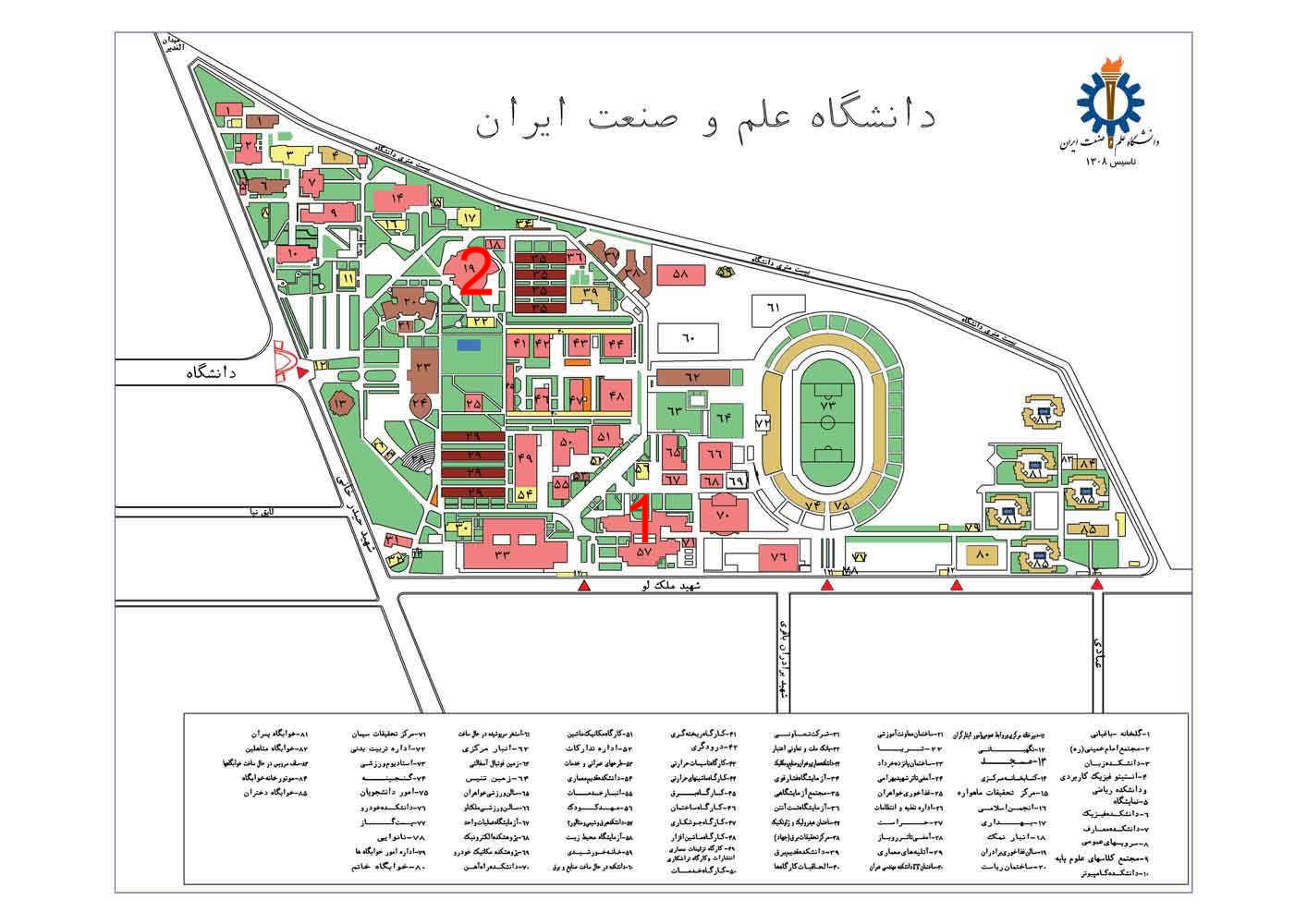
Students were asked to congregate in front of the chemical engineering school (number 1 on map below) of Elm-o-Sanat University at noon. Kianoush Asa was studying to become a petrochemical engineer before he was killed.
The following footage shows students amassed in front of the chemical engineering school as they shout, 'Students would rather die than accept humiliation':
The protesters then marched peacefully towards what has come to be called Martyr Kianoush Asa Park (number 2 on map), a green area between the men's cafeteria and the professor's cafeteria. Students have started calling the area Asa Park since a memorial service was held for Kianoush there last year.
Students chanted 'Honorable student, support, support.' They cover their faces as they go past a man who is filming them:
The same man can be seen in this footage trying to film the faces of the students:
'We are all Kianoush and Neda. We speak with one voice,' they said, referring to Asa and Neda Agha Soltan, perhaps the most famous protester killed by security forces:
'Woe on Science and Technology University if it accepts humiliation':
Students sang the protest anthem 'Yareh Dabestaniyeh Man' (My Schoolmate). For a subtitled clip of a new version of the song, please click here:
The protesters chanted the name of opposition leader Mir Hossein Mousavi. 'Ya Hossein, Mir Hossein':
On March 9, 2010, Students celebrated what would have been the birthday of Kianoush at Asa Park:
Hundreds of protesters commemorated the death of fellow student Kianoush Asa with a peaceful march that began at noon on Tuesday, June 1, 2010, on the campus of Elm-o-Sanat (Science and Technology) University, where Asa was pursuing a graduate degree.
Kianoush Asa was killed by security forces in Tehran's Azadi Square on June 15, 2009, but his family only managed to find his body at a Tehran morgue on June 24. He was buried in section 58, plot 12 of Bagh Ferdows cemetery in his hometown of Kermanshah a few days later.
The organizers of today's ceremony may have decided to hold the commemoration two weeks earlier than the real anniversary of his death in order to circumvent severe security measures which are expected to be in place in Tehran during the anniversary of the disputed election of June 12.
Students were asked to congregate in front of the chemical engineering school (number 1 on map below) of Elm-o-Sanat University at noon. Kianoush Asa was studying to become a petrochemical engineer before he was killed.
The following footage shows students amassed in front of the chemical engineering school as they shout, 'Students would rather die than accept humiliation':
The protesters then marched peacefully towards what has come to be called Martyr Kianoush Asa Park (number 2 on map), a green area between the men's cafeteria and the professor's cafeteria. Students have started calling the area Asa Park since a memorial service was held for Kianoush there last year.
Students chanted 'Honorable student, support, support.' They cover their faces as they go past a man who is filming them:
The same man can be seen in this footage trying to film the faces of the students:
'We are all Kianoush and Neda. We speak with one voice,' they said, referring to Asa and Neda Agha Soltan, perhaps the most famous protester killed by security forces:
'Woe on Science and Technology University if it accepts humiliation':
Students sang the protest anthem 'Yareh Dabestaniyeh Man' (My Schoolmate). For a subtitled clip of a new version of the song, please click here:
The protesters chanted the name of opposition leader Mir Hossein Mousavi. 'Ya Hossein, Mir Hossein':
On March 9, 2010, Students celebrated what would have been the birthday of Kianoush at Asa Park:
Subscribe to:
Posts (Atom)